Brine, Wind and Bright Light: A Coastal Sign Plan for Cafés, Marinas and Harbour Yards
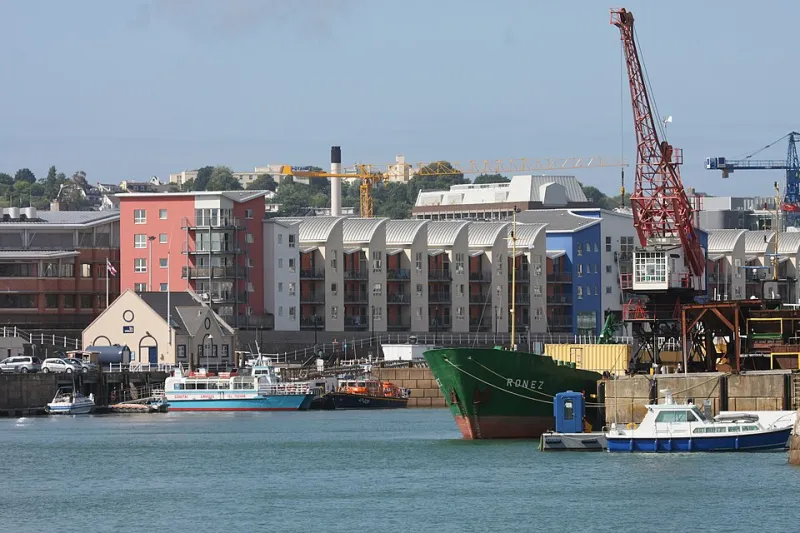
Photo: Danrok, CC BY 3.0, via Wikimedia Commons
A sign on a harbour wall lives a different life from a sign on a quiet inland high street. Salt sits on the surface. Wind pushes rain into places rain should not go. Sun bleaches colour and works on sealant. A coastal café, marina or boatyard needs a sign plan that expects all three.
Sandblasting is well suited to coastal work because the mark is cut into the material rather than stuck onto it. But the surrounding specification still has to do its job. The blast is only one part of the system.
Start with the exposure zone
Not every coastal site is equal. A sign under a café canopy in a sheltered yard sees less salt than a panel on an exposed harbour wall. A marina office set back from the water is different from a boatyard gate taking spray in a south-westerly.
Placement matters as much as material. Avoid horizontal ledges where salt and water can sit. Think about prevailing wind and driving rain. A panel that faces the weather head-on will need more attention than one tucked under an eave. If the sign can be fixed with a slight fall or with drainage in mind, so much the better.
Materials that earn their keep
For fixings, marine-grade stainless steel is the sensible starting point in exposed locations. Standard mild steel fixings may look fine on day one and less fine after a winter of salt. Aluminium panels work well when the grade and coating are right. Powder-coated aluminium can perform nicely if edges and fixing points are properly protected.
Sandblasted glass can be beautiful in sheltered coastal settings, but it needs careful detailing and a realistic cleaning routine. Natural stone can work, though porosity and salt need thought. Timber can be used, but it needs a coating system and a maintenance plan rather than a hope.
The key point is that no material is maintenance-free at the coast. The question is whether the maintenance is reasonable and whether the material can be refreshed without replacing the whole sign.
Edges, backs and hidden faces
Coastal failures often start at the edges. Water gets behind a panel, sits on a fixing, or finds an unsealed cut edge. Edge sealing is not decorative. It is part of the sign.
Paint or seal the back and edges where appropriate. Use isolation washers between dissimilar metals. Make sure fixings do not create a trap for water. Stand-off fixings can look sharp, but they need to be specified so water can drain rather than pool. Hidden faces still deserve a finish because they are not hidden from the weather.
Finishes that hold their colour
Paint infill on sandblasted lettering should be chosen for UV stability and adhesion, not just for the colour chart. Two-pack polyurethane systems are often a better conversation than a cheap enamel. Clear coats need to be suitable for coastal exposure and compatible with the paint beneath.
Dark colours can show salt bloom. Very bright colours can fade. A maker should be honest about colour fastness and about how a finish will age. A slightly softer colour that weathers well can look better after three years than a punchy colour that goes chalky.
A maintenance routine that fits the season
A coastal business does not need a laboratory routine. It needs a simple one that actually happens. A monthly visual check is a good start: look for chalky paint, lifted edges, corroded fixings, water traps and green growth in shaded areas.
A quarterly wash with fresh water and a soft brush will remove salt and grime. Avoid aggressive power washing, especially on blasted surfaces and painted infill. Check sealant and fixings at the same time. Touch in small paint failures before they become large ones.
Before the busy season, give the sign a proper inspection. After the season, do it again. That rhythm fits how coastal businesses actually work.
Cafés, marinas and boatyards ask different questions
A café may want a menu board, a name panel and a pavement sign that can be cleaned easily. A marina needs wayfinding that reads at a glance and survives spray. A boatyard needs practical, robust signage that can take knocks and still look deliberate.
The common thread is legibility in bright, wet, salty conditions. Contrast matters. Fixing matters. A beautiful panel with a poor fixing plan is not a coastal sign; it is a future repair job.
When briefing a maker for a coastal project, say where the sign will sit, how exposed it is, what it will be fixed to, how often it can be cleaned and who will maintain it. Those answers shape the specification more than a colour swatch alone.