House Proud: Sandblasted Names That Earn Their Keep in a British Winter
Photo: sandblasted slate house sign UK stone cottage, via datetodays.com
Off-the-shelf house signs have their place. Usually, that place is a garden centre bin, next to the solar-powered gnomes. A mass-produced plaque with a generic font and a stock border can tell visitors the name of the house, but it also tells them something else: nobody thought about it very much. For a home — especially a rural property, a listed cottage or a house with a name that has been on the Ordnance Survey since before anyone alive was born — it is worth doing better.
Sandblasted house signs are not complicated. You choose a material, a typeface, a fixing method and a finish. But those choices matter more than they seem, especially in the UK, where a sign might face driving rain, frost, coastal salt and a planning officer with a keen eye for detail.
Start with the rules, not the font
Before anyone gets excited about typefaces, check the practical side. House names and numbers are handled by the local council's street naming and numbering team. If you change a house name, tell the council and Royal Mail. Emergency services and delivery drivers rely on the number staying visible, even if the name does the decorative work.
Planning permission is not usually needed for a standard house sign. But conservation areas, listed buildings and Article 4 directions can change that. In a conservation area, the sign itself may be acceptable, but fixing it to a historic wall might need consent. On a listed building, any alteration — including drilling into stone or fixing a plaque — can require listed building consent. It is always worth a phone call to the conservation officer before the drill comes out. They are usually more helpful than their reputation suggests, provided you ask early.
Slate, stone or glass?
Slate is the classic choice for UK house signs, and for good reason. It is dense, takes a sharp blast and weathers gracefully. A dark slate plate with crisp, unfilled lettering looks at home on a stone cottage, a converted barn or a modern brick house. It also copes well with frost and rain, which is handy in a country that specialises in both.
Stone — limestone, sandstone or granite — gives a more architectural feel. It suits gateposts, estate entrances and larger properties where the sign is part of the masonry rather than an add-on. Stone needs a careful finish because some varieties are softer than others. A sample blast is the sensible first step.
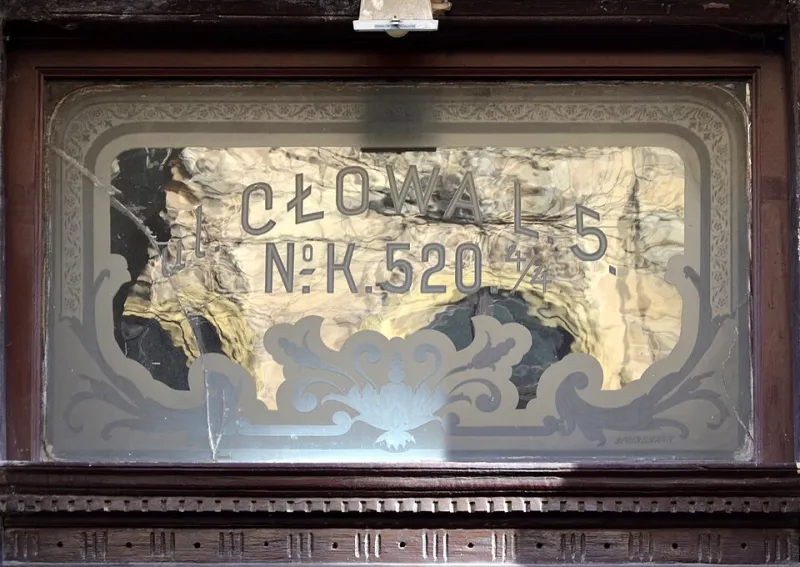
Glass is the contemporary option. A sandblasted glass nameplate can look sharp beside a modern front door, and it works well in sheltered porches where it will not take the full force of the weather. Etched glass is subtler than a painted plaque, but it still needs protection from constant standing water and heavy impact.
Metal is the practical outlier. Stainless steel or powder-coated aluminium can be sandblasted for a durable, low-maintenance finish. It is less traditional than slate, but in exposed coastal spots or on a modern self-build it can be the right answer.
Fixing methods that do not wreck the wall
The best sign in the world is no good if it is fixed badly. The fixing should suit the wall, the material and the weather.
For slate and stone, hidden stainless steel pins or a mortar bed are common. Drilling into historic masonry needs care: fix into the stone rather than the mortar joint where possible, and avoid trapping water behind the sign. A small gap or a drainage detail can prevent frost damage.
Glass signs are usually held with stand-off fixings, which keep the glass away from the wall and allow air to move behind it. That reduces the risk of water sitting in the wrong place. On timber cladding, choose fixings that will not split the board and allow for a little movement.
Adhesive-only fixing is tempting because it avoids drilling, but it is rarely the right choice for exterior signs. Adhesive can fail in freeze-thaw conditions, and removing it from historic fabric can be a nightmare. If drilling is not an option, talk to a conservation-aware fabricator before reaching for the cartridge gun.
What the British weather actually does
A house sign in the UK has to cope with rain, frost, UV, lichen and, on the coast, salt. Sandblasted lettering handles most of that well because the texture is part of the material. There is no paint layer to flake off, no vinyl to lift and no applied letter to go missing.
If the lettering is paint-filled for contrast, that paint needs to be suitable for exterior use and applied properly. Dark paint on slate can look wonderful, but it will need occasional checking. Unfilled blasting is more subtle and virtually maintenance-free, though it can be harder to read from a distance in low light.
Glass needs a sheltered spot. Constant water on etched glass can leave mineral deposits, and thermal movement can stress fixings if the sign is badly installed. Slate and stone are the low-drama options. Metal is durable, but coastal salt will eventually find any weak point in the finish.
Avoiding the generic look
The quickest way to make a house sign look ordinary is to choose a typeface from a drop-down menu and centre it in a rectangle. The second quickest is to make the sign too small for the wall, or too large for the gate.
A better approach is to think about how the name will be read. Is it a short name that can be set large? Does it have a long word that needs a wider plate? Would a number work better on its own, with the name set smaller beneath? Does the house have a history — an old farm name, a field name, a family name — that suggests a particular style of lettering?
Local lettering traditions are worth a look. A sign in a Welsh village, a Scottish estate or a Cornish coastal town can draw on different visual cues without turning into a pastiche. The aim is not to fake a heritage sign. It is to make something that looks like it belongs.
Lighting is the final piece. A sandblasted sign can be lit by a small, shielded fitting, but the fitting should not become the main event. In conservation areas, check whether external lighting is acceptable before buying anything.
A short spec sheet
Measure the space properly, including the wall texture and any nearby downpipes. Decide whether the sign is for visitors, deliveries or both. Choose a material that suits the building and the weather. Ask for a full-size mock-up. Specify the fixing method and check it against the wall. Agree the finish and any paint fill. Then let the fabricator get on with it.
A house sign is a small thing. But it is one of the few pieces of design that a visitor will look at closely, at eye level, in all weathers, for decades. It is worth getting the texture right.