What the Grit Reveals: Handling Historic Lettering Found Mid-Blast
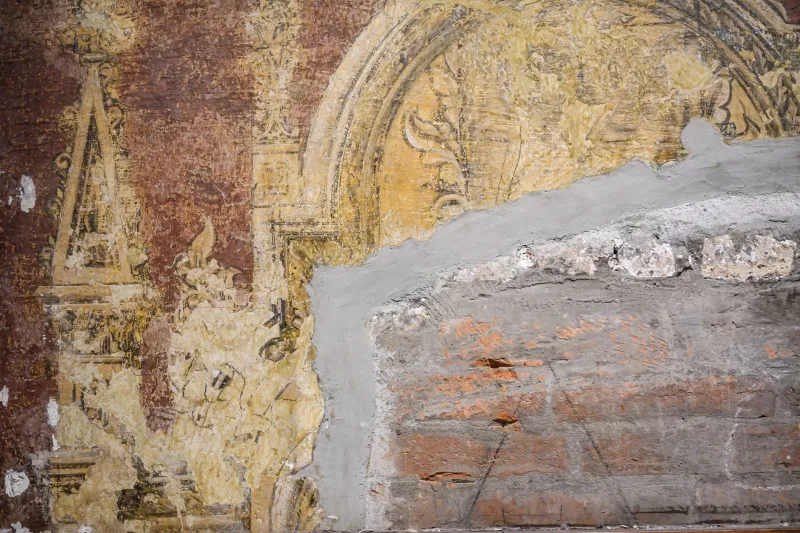
Sandblasting is usually a means to an end: clean back to a sound surface, then make something new. Occasionally the grit does something else. It lifts a layer of modern paint and finds a set of letters underneath — a faded brewery name, a Victorian grocer, a Masonic mark, a date stone that had been painted over. The temptation is to keep going and see what appears. That is exactly the moment to slow down.
Ghost signs are not automatically precious. Some are recent vinyl shadows, some are largely gone, and some sit on a substrate that will not survive another pass. But when the lettering looks old, is integral to the building, or sits in a conservation area, the job changes from surface preparation to heritage decision-making. The trick is to recognise that shift early and handle it with the same care you would give any other unexpected find.
First, read the wall before the nozzle moves
Stop blasting in the immediate area. Keep the working zone small and use a hand torch or raking light to inspect what has appeared. Is the lettering paint on render, gilt on glass, incised into stone, or a sandblasted relief in timber? Each tells a different story and has a different tolerance for abrasion. Paint on lime render can be damaged by water and pressure; gilding on glass can be removed by a single careless pass; incised stone may be sound but surrounded by friable mortar.
Look at the edges. Crisp edges suggest the lettering is intact and perhaps protected by an old coating. Soft, chalky edges suggest the substrate is already failing. Check for hollow render, rust bloom, salts, and any sign that the surface is holding on by habit rather than adhesion. If there is lead paint in the mix, or the building predates the 1980s, treat dust and debris as a hazard and follow the usual UK controls for RPE, containment and waste. A find is not a reason to abandon health and safety.
Also ask what the lettering belongs to. A painted advertisement on a brick flank is one thing; a name cut into a listed stone lintel is another. If the building is listed, or sits in a conservation area, the historic fabric may be protected even if the lettering is not separately listed. That does not automatically mean you cannot touch it, but it does mean the local authority conservation officer should be in the conversation before anyone decides to erase it.
The sensible pause
There is no shame in pausing a blast. A short delay is cheaper than an unintended removal. If the lettering appears original, is in good condition, or is unusually complete, call a conservation-accredited professional or a historic buildings consultant for a site visit. For churches and public buildings, the relevant faculty or estate team may also need to know. For ordinary high street buildings, the local conservation officer is often the quickest route to a sensible view.
The key is to pause before further abrasive work, not after. Once the surface has been cut back, options narrow. A conservator can advise on consolidation, gentle cleaning, paint analysis, or whether the lettering can be stabilised in place. They can also tell you whether the substrate is likely to survive a new sign being fixed over or around it. That matters because the most common bad outcome is not deliberate destruction; it is a well-meant new fascia screwed through fragile historic fabric.
Document it properly
Photograph the find before anything else changes. Use raking light from one side to bring out relief, and take a straight-on shot for letterforms. Include a scale — a folding rule or a coin is fine — and a colour reference card if you have one. Capture wide context, mid shots of the whole sign, and close-ups of edges, fixings, damage and any surviving decoration. Note the date, location, substrate, depth of blast at that point, and the methods used so far.
Keep the files together and back them up. If the client later asks why a decision was made, or a conservation officer wants to see what was there, a tidy photographic record is worth more than a vague memory. Do not wet friable painted surfaces just to make them photograph better; you can alter what you are trying to record. And do not scrub at the lettering to see if it comes up brighter. The goal is evidence, not a reveal for social media.
The client conversation
Once you have the facts, sit down with the client and set out the realistic options: preserve in place, stabilise and incorporate, cover with a reversible panel, or record and remove. Each has cost, programme and consent implications. Preservation may mean changing the new sign design, adjusting fixings, or accepting a patchy finish. Removal may be the right answer for a fragile surface, but it should be a documented decision, not a default.
Agree the way forward in writing before the nozzle goes back on. A simple variation order or site instruction noting the find, the advice taken, the chosen option and any changed scope will save arguments later. If the client wants to keep the lettering, build in time for conservation input and avoid promising a pristine result. If they want it gone, make sure everyone understands what will be lost and that the record has been made. Then, and only then, pick up the blaster.
The best outcome is not always a perfectly preserved ghost sign. Sometimes it is a new sign that sits respectfully alongside a fragment of the old one, or a clean shopfront with a decent photographic archive in the job file. Either way, the craft is in noticing what the grit has uncovered and giving the decision the time it deserves.